
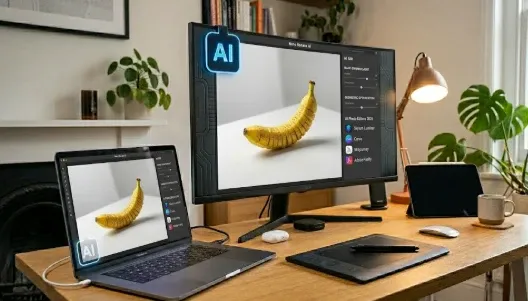
Which AI Photo Editors Are Worth Your Time in 2026?
I spent a month running the same twelve raw files through every editor that promised to think for me. Most of them thought wrong. Two of them thought brilliantly, and one of them thought so hard it invented a building that was never there.
Here is what actually earned a place in my workflow, and what I uninstalled by week two.
What I Was Actually Testing
Nobody needs another feature checklist. I cared about three things, in this order:
- Does it respect the original exposure? An editor that quietly lifts every shadow to the same mid-grey is not editing, it is averaging.
- Can I undo the intelligence? Every AI adjustment needs to be a layer I can dial back, not a destructive bake.
- How fast is the round trip? If a mask takes forty seconds to generate, I will draw it myself and be finished first.
A tool that makes an average image look good is worth very little. A tool that makes a good image look like itself, faster, is worth paying for.
The Ones That Stayed
Subject masking has quietly become solved. Every serious editor now finds a person, a sky, or a plate of food without complaint, so masking is no longer where these tools separate.
Generative fill is where they fall apart. It is superb at removing a bin from a pavement and dangerous the moment it has to invent structure — windows repeat, brick courses drift, and text becomes soup.
What I Would Tell A Client
Use the AI for the tedium and keep the judgement. Nothing in this class of tool has an opinion about your photograph; it has a statistical average of everyone else’s.
Which one did I keep? The boring one with the best masking and the worst marketing.